We raised $15 million to help risk teams keep pace with AI-scale attacks
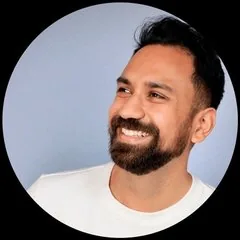 Arjun Bisen, CEO and cofounder

Today Overwatch Data is announcing a $15 million Series A led by Mouro Capital, with strategic participation from Visa Ventures and Capital One Ventures and follow-on investments from PruVen Capital and New Era Capital Partners. Allie Garfinkle covered the round as part of her profile in Fortune’s Term Sheet this morning, and I want to use this post to say more about why Zara Perumal and I started Overwatch, what our customers have taught us, and what the new capital will enable us to do.
I’ve worked in risk for most of my career. I led a user risk team at Stripe, worked on trust and safety problems at Google and Twitter, and before any of that I helped write Australia’s National Cyber Engagement Strategy while in the Foreign Service.
For most of those early years the job had a rhythm: A new threat surfaced, an analyst escalated it, someone investigated, and the team adjusted its policies. Attackers and defenders moved at roughly the same speed because both sides were people. I started to see that break around COVID, as the world rapidly digitized and threat actors found much greater efficacy in exploiting the online environment. Zara noticed the same while at Google’s Threat Analysis Group. To say this has escalated would be a massive understatement.
Why we built Overwatch Data
AI has made attacks cheaper, faster, and far more numerous. Americans lost $20.9 billion to cybercrime in 2025, up 26% on the previous year, according to the FBI. Most risk teams still work at human speed, and they work apart: cyber, fraud, and onboarding each see a different piece of the same attacker. I’ve written about why that has to change, and why threat intelligence needs to sit inside every risk decision, in our thesis on operational threat intelligence. Overwatch is how we’re putting that thesis to work.
What we built
Overwatch is an AI-native threat intelligence and risk operations platform for cyber, fraud, and risk teams. Our agents collect adversarial signals wherever they originate, strip out the noise, connect patterns across sources, and carry an investigation through to a recommended decision, along with the evidence an analyst needs to verify it. What’s more, every validated investigation feeds a shared knowledge base, so the system gets sharper with every customer that runs on it. That loop is how a risk team moves from reactive triage to proactive, scalable operations.
The impact is already measurable. One regional bank customer told us Overwatch helped its team identify six times more critical threats, faster, and cut manual triage by more than 20 hours per week for each analyst. Visa uses Overwatch today.
Why these investors
Mouro Capital backs companies that automate the operational backbone of financial services, and its portfolio in data privacy, safe model deployment, and bank infrastructure gives us partners working on adjacent problems. Visa sits at the center of the payments system, where fraud and cyber risk hit first and hardest. It knows our work firsthand and chose to put capital behind it.
What the money is for
We’ll use the round to extend our agents across more of the risk lifecycle, from continuous monitoring and investigations into the criminal undergrounds to merchant onboarding and due diligence.
We’re also growing the team. Jeff Needham, formerly CRO at Flashpoint and Intel 471, joined us last year to lead go-to-market, and we’re hiring across engineering, investigations, and sales.
None of this happens without my cofounder Zara, who has spent more than a decade building AI systems and leading threat analysis at Google, or without a team that understands this problem as deeply as she and I do. Thank you to them, and to the customers who trusted us early.
If you run a fraud, cyber, or merchant risk team and your queue grows faster than your headcount, we’d like to talk.
Arjun Bisen, Cofounder and CEO, Overwatch Data
Fifteen years in global risk at Stripe, Google and Twitter, including leading Stripe's fraud intelligence and onboarding risk team.

Cyber Pulse, in your inbox.
What changed in the threat landscape, what risk teams should watch, and one operational takeaway. Written by Arjun and Zara.
Stop chasing alerts. Start working ahead of them.
Overwatch turns real-time understanding of the criminal underground into the investigations and risk decisions your fraud and security teams have to make every day.